
Cloud VMS vs On-Premise NVR: Which is Right for Your Enterprise?
By Kushal Sanghvi | March 17, 2026
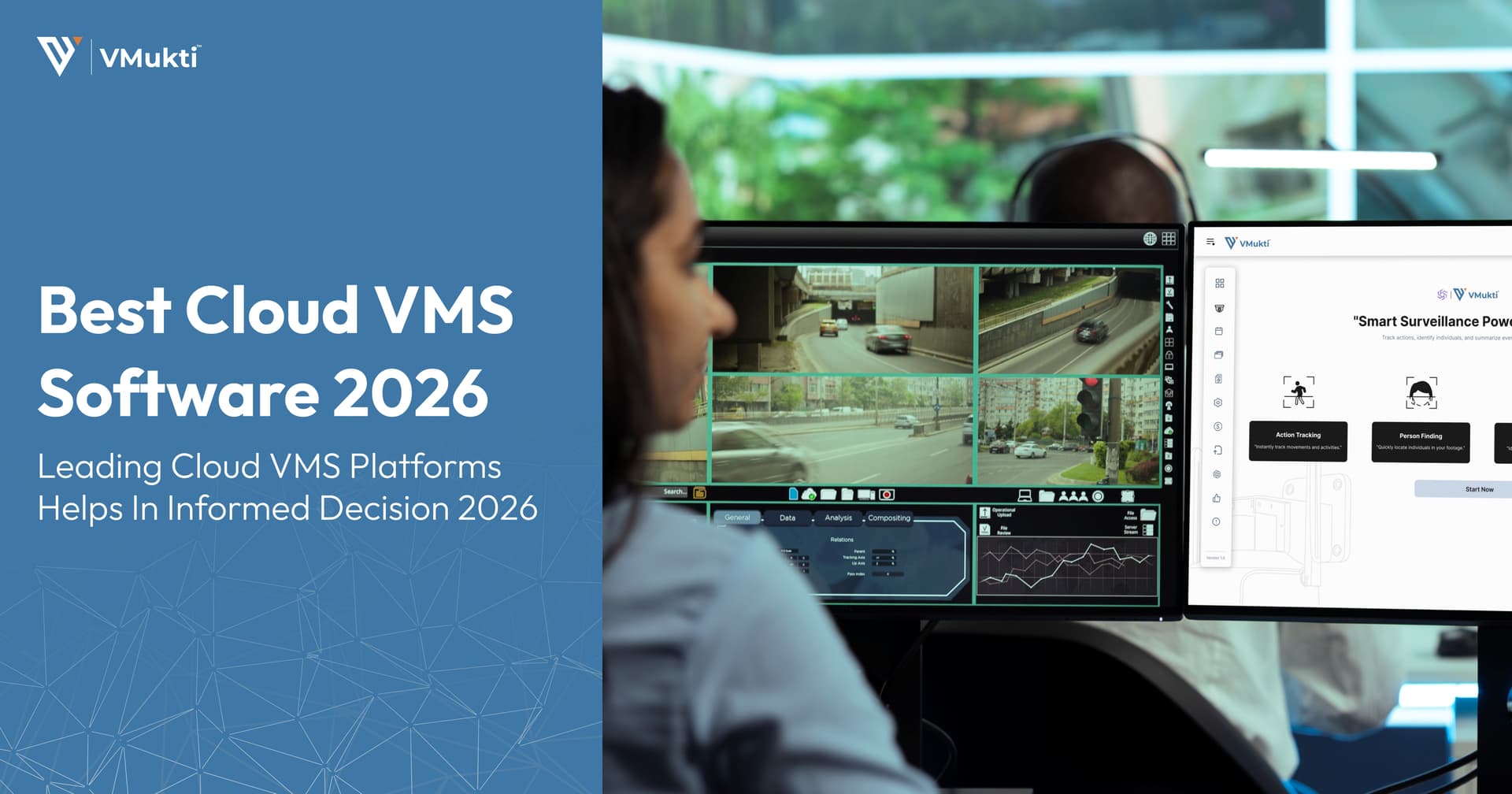
The video surveillance market reached $71.65 billion in 2026, with a critical inflection point emerging: enterprises are transitioning from expensive on-premise NVR systems to flexible cloud-native VMS platforms. This detailed comparison helps enterprise decision-makers navigate this critical infrastructure decision.
Understanding the Fundamental Differences
Understanding the Fundamental Differences
An On-Premise NVR is a physical device installed at your location that captures, processes, and stores video from connected IP cameras. All processing occurs within your network behind your firewall, and the organization maintains complete infrastructure responsibility. A Cloud VMS is a SaaS platform where video processing, storage, and management occur in vendor-hosted data centers, accessed through web browsers and mobile apps. This distinction affects cost structure, security posture, operational complexity, and business continuity capabilities.
Total Cost of Ownership Comparison
Total Cost of Ownership Comparison
On-premise NVR total cost for a 100-camera enterprise deployment typically ranges from $150,000-$400,000 in year one, with $30,000-$80,000 annual maintenance costs covering hardware, storage, IT staff, licensing, power, and disaster recovery. Cloud VMS operates on subscription pricing at $15-$50 per camera monthly, totaling $18,000-$60,000 annually for 100 cameras. Cloud VMS typically delivers 20-50% TCO savings over 3-5 years by eliminating hardware procurement, replacement cycles, and internal IT resource requirements.
Deployment Control and Data Sovereignty
Deployment Control and Data Sovereignty
On-premise NVR gives organizations absolute control over video data — no footage leaves your network without explicit action. This appeals to enterprises with strict data residency requirements or regulatory mandates. However, organizations bear full responsibility for data security, backup, and redundancy. Cloud VMS vendors implement enterprise-grade security and compliance frameworks that most organizations cannot replicate internally. Many enterprises now deploy a hybrid approach: edge-based NVR at camera locations for local recording and immediate processing, with cloud VMS for centralized management, analytics, and long-term archival.
Scalability and Growth Flexibility
Scalability and Growth Flexibility
On-premise NVR scaling requires storage capacity planning, network bandwidth assessment, IT resource allocation, capital expenditure, and lengthy procurement cycles. For distributed enterprises, this becomes operationally complex and financially burdensome. Cloud VMS scaling occurs seamlessly — add cameras to your account and begin streaming immediately. Storage and bandwidth scale automatically with no capital expenditures. This flexibility particularly benefits enterprises with multiple distributed locations, planned facility expansion, temporary camera deployments, or seasonal surveillance requirements.
Maintenance, Updates, and Operational Burden
Maintenance, Updates, and Operational Burden
On-premise NVR requires organizations to manage hardware maintenance, storage lifecycle, software updates, security patches, system monitoring, disaster recovery testing, and hardware end-of-life replacement. These activities require dedicated IT personnel with video systems expertise. Cloud VMS shifts this burden to the vendor — they manage hardware infrastructure, automatic software updates with zero downtime, immediate security patches, system monitoring and backup, compliance maintenance, and new feature releases. Organizations focus on configuration and optimization while vendors handle infrastructure.
Cybersecurity and Business Continuity
Cybersecurity and Business Continuity
On-premise NVR security requires organizations to secure the physical device, network perimeter, user authentication, encryption, OS patching, and conduct regular security assessments. A compromised NVR provides attackers direct access to video feeds and potentially your internal network. For business continuity, hardware failure means no recording during replacement, and natural disasters can cause complete system loss with recovery taking days or weeks. Cloud VMS vendors implement multi-layer network security, DDoS protection, automatic security patching, encryption in transit and at rest, and customer account isolation. Cloud platforms feature automatic failover across multiple data centers, continuous recording during local outages, and recovery measured in minutes rather than days.